
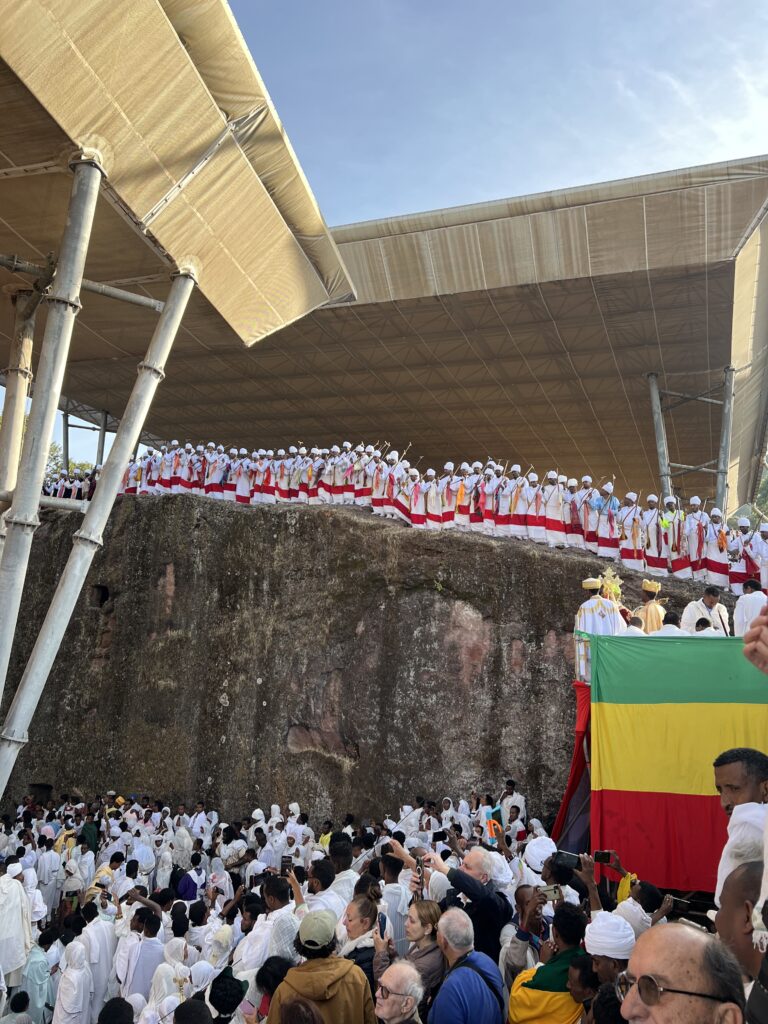
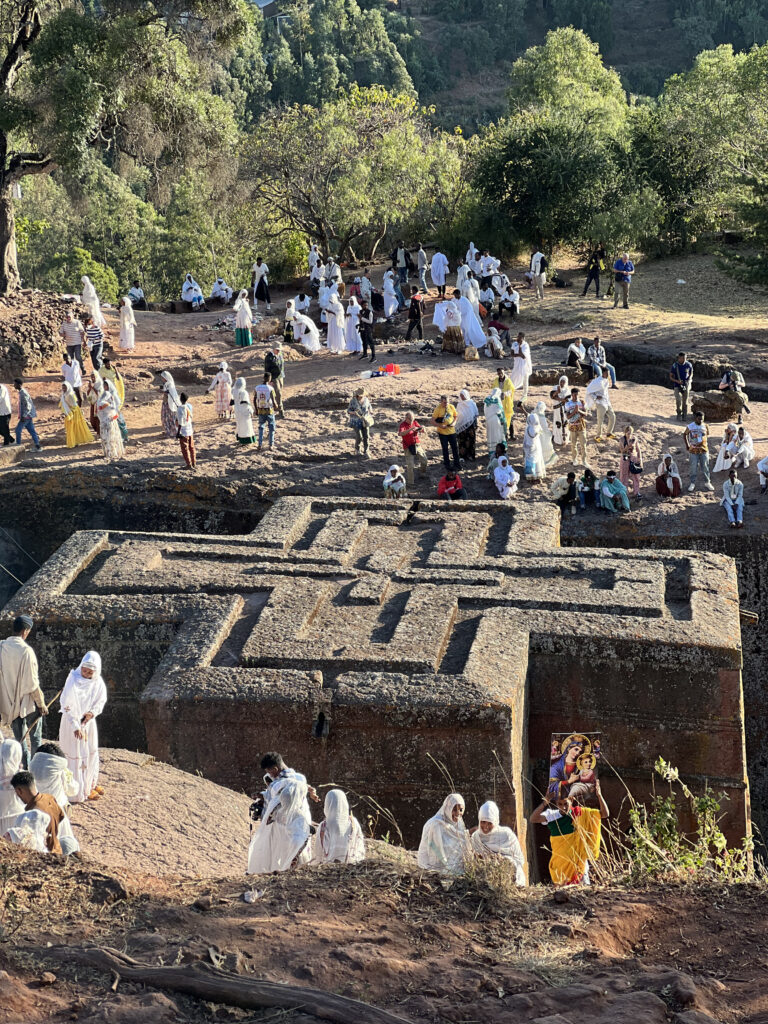
Timket, or Timkat as some spell it, isn’t just another holiday. It’s loud, it’s colourful, and it’s one of the oldest living traditions in Ethiopia. Every January 19 (or the 20th in leap years), people gather to celebrate the baptism of Jesus Christ in the River Jordan. Churches, rivers, and towns burst into life. The air smells of incense, drums beat, priests chant, and white-clad crowds sway to rhythms that have lasted centuries.
If you’ve ever seen a video, you might think it’s just a festival. But look closer. Every Tabot procession, every sprinkle of water, every hymn is a thread connecting modern Ethiopia to its ancient Christian roots.
The Tabot: Ethiopia’s Sacred Heart
At the centre of Timket is the Tabot. Imagine a tiny, sacred replica of the Ark of the Covenant or the Ten Commandments, kept hidden in churches all year. But on Timket? It comes out. And not quietly.
- Priests carry it through streets.
- Drums, horns, and chants echo everywhere.
- Worshippers sing in Ge’ez, a language that feels frozen in time, yet very much alive.
It’s loud, chaotic, joyful, and deeply spiritual. Watching it, you get a sense of history breathing, a direct link to rituals performed by people hundreds of years ago.
Quick tip: Stand back if you’re near the Tabot—it’s considered extremely sacred. Or join respectfully if offered a blessing.
Water Blessing: Ancient Rites, Modern Lives
The next morning, holy water is blessed and sprinkled on the crowd. Some people even step into the river themselves, re-enacting baptismal vows. Think of it like a splash of history you can feel on your skin.
- The water ceremony is more than a show. It’s about renewal, faith, and community.
- Everyone, locals and visitors alike, feels part of something centuries old.
Yes, it’s wet. Yes, it’s early. But it’s worth it. And the crowd cheering around you? That energy is as old as the rituals themselves.
Music, Dance, and the Pulse of Tradition
Timket isn’t silent. It’s rhythmic, messy, glorious noise. Drums beat, cymbals clash, priests chant, dancers spin. These tunes aren’t random; they carry the memory of generations.
| Element | Ancient Tradition | Modern Practice |
| Tabot Procession | Hidden in church | Public parades with music and dance |
| Water Blessing | Private baptismal rites | Public river ceremonies, sprinkling on crowds |
| Music & Chant | Ge’ez hymns | Choirs with drums, horns, participatory dancing |
| Clothing | White robes for purity | Shamma and netela worn by all ages |
Notice the table? It’s simple, but it shows how traditions adapt yet survive, a perfect example of ancient rituals in modern times.
Why Timket Matters Today
Timket is living history. It’s more than celebration; it’s teaching. Children learn faith and community. Families reconnect. And strangers, tourists, or curious visitors get to experience something that has lasted, unchanged in essence, for centuries.
- It proves traditions can survive modern life.
- It binds people to their culture.
- It celebrates faith, community, and identity all at once.
Experience Timket with Liyu Ethiopia Tours
Want to witness it yourself? The 8-Day Discover Epiphany Tour with Liyu Ethiopia Tours takes you through Ethiopia’s heart. You’ll see historic churches, join processions, watch the Tabot, and maybe even catch a splash of holy water yourself.